The future is always full of branching possibilities.
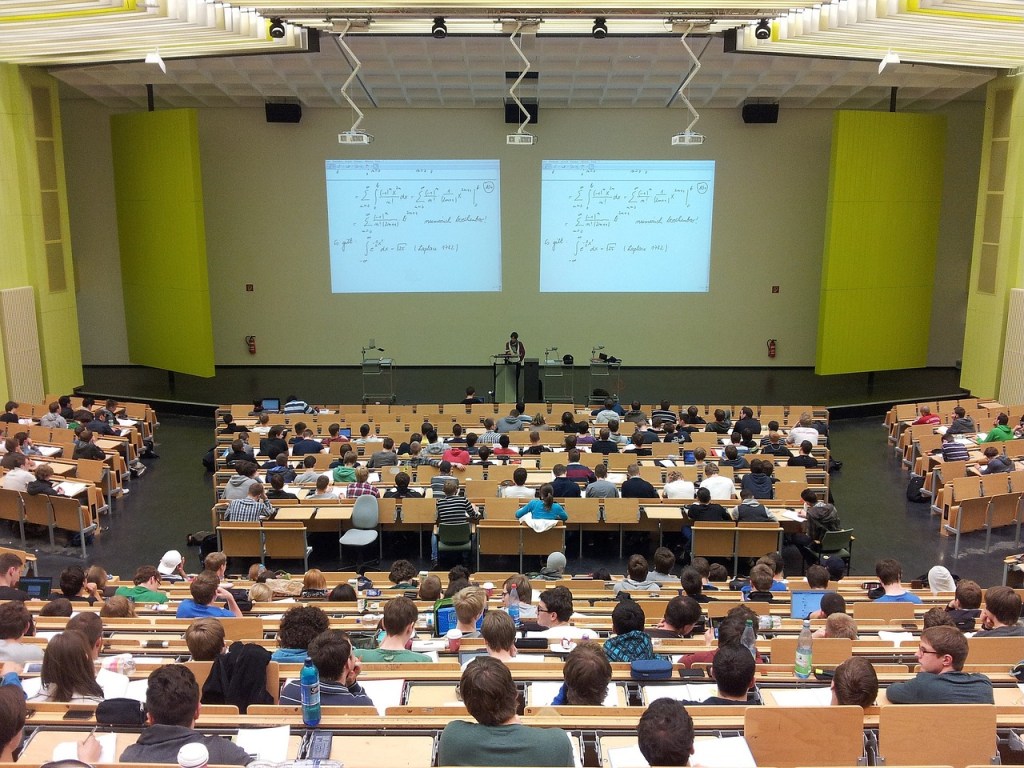
When I went back to school in May 2021 as a middle-aged adult, I’d gained admission into a general science degree in Mathematics. The plan was to prove I could handle the workload, get myself bumped up to an honours degree (a four-year program instead of a three-year), but to parlay the handful of credits that were both applicable and worthwhile from my first trip to Queen’s and make use of summer terms to finish that four-year degree in three calendar years so I could follow the undergraduate degree with an education degree.
But, to borrow one of the best lines from the original Star Wars trilogy and twist my original statement, always in motion is the future.
By the end of my second term back, and the Fall term of a regular school year, I’d gotten away from Math as a major, passing through considering Mathematical Physics and Pure Physics to land specifically Astrophysics, with more than enough Math courses planned for that to be my second teachable.
By the end of the Winter term, I’d figured out that I really liked being in school. Okay not every moment, and I still wasn’t fond of exams, but academics as a path felt viable. More, it felt like an interesting possibility.
And I did very well in those first few terms. Funny how far a real work ethic and the understanding that your success depends in large part on how you respond to the opportunities and tasks around you can go.
Without getting into all the possible branches I identified at that point, it ultimately came down to three possibilities:
- The original plan. Honours degree followed by education degree with the objective of working as a high school math and science teacher for the remainder of my professional years.
- Honours degree followed by advanced degrees with the objective of working in an academic or research field for the remainder of my professional years.
- Honours degree followed by a Master’s degree and then possibly an education degree with the objective of teaching at the high school or college level for the remainder of my professional years.
With two paths to the MSc, standard four-year program and an accelerated version offered by Queen’s that lets you start working on the MSc level course work a little early and then count two courses towards both the BSc and the MSc, I actually had three benchmarks for GPA to look at for these options. An education degree (at Queen’s or otherwise) seems to be generally looking for a cumulative GPA of 3.0 – this is a B, or a minimum average of 73% across the whole degree. Standard entry to graduate school looks for that GPA to be 3.3, a B+ average or 77%. The accelerated program pushes that up to a GPA of 3.7 which translates to an A- average, 80%.
The objective became to hit the threshold for the Accelerated MSc program and so keep all possible doors open. I’m not going to brag about my GPA here, but I will say that at this point I have achieved that goal and was offered entry (which I accepted) into the Accelerated plan.
So, I’ve cut the first option out of the three I identified near the end of First year. The accelerated MSc will teach me, by essentially spending two years on a single huge project, whether I like research or not. When I’ve figure that out, I’ll know which direction I’m going from there.
If I like research, I’ll have a PhD to do after the MSc, which means I have 6 more years of school before seeing where I can be useful (and have fun) in some kind of research roll. Final graduation: age 59.
If I don’t like research, I’ll have an Education degree to do after the MSc and I have 3 (or possibly 4, depending on where I end up going to Teacher’s College) more years of school before I’m trying to find a place to be as a teacher. Final graduation: age 56 (or possibly 57).
Either way, I’ve got lots of work to do yet.
And I did have one high school teacher who had a doctorate in physics, so there’s that possibility, too.
Be well, everyone.




 Life, Writing, Weirdness
Leave a comment