I’m three and a half weeks from being finished all of the academic requirements for an honours Physics degree. But that’s not where I started.
Bear with me for a paragraph or so. It’s entirely possible I’ve put most or all of this into various blog posts over the past five years, but I find it interesting to put the progression all in one place. If you don’t, please feel free to skip to the end of the post (it’s going to be a long one) or close the tab. This will have very little to do with my writing, thought it’s one of the biggest contributing factors to why there’s been so much less of it for the past four years as opposed to the decade before that.
Let’s have fun and organize this as a timeline of events:
March 2020
The world shuts down. Even the Casino industry, though it takes us an extra week to power down everything properly. Go home. It’s probably only for a few weeks, but we’ll call you back when we need you.
June 2020
Seriously, don’t call us, we’ll call you.
August 2020
Near the end of the month. Actually, we’re not going to call you ever again. Here’s your package. Go away.
Me: What the heck do I do now?
My Wife: Well, you’ve been talking about wanting to go back to school since the kids were small. What’s stopping you now?
Me: Hmm. [Spends some time thinking about what I’d like to do with the rest of my professional working life. Makes a couple of phone calls and then writes polite letter to the registrar’s office at Queen’s.]
September 2020
Some notes about how Queen’s does things:
- A one-term course is typically 3 units, so a full-year course is 6.
- It takes 90 units (30 one-term courses or equivalent) for a 3-Year General degree and 120 for a Four-Year Honours degree.
- In Arts and Science at Queen’s, you don’t apply for a major until you’ve got some history as a student. First Year, if you’re a full-time student, is where you take the important introductory courses for what you want to do and prove you can be a decent student.
- And of course, you have to satisfy the entrance requirements for that degree plan first in terms of minimum marks in first-year courses specific to the program needs.
As a mature student, coming in after a very long absence from formal education, the basic path into a degree program for me looked like this:
- Star with a 6-unit “interest: course, or two 3-unit courses completed in consecutive terms, with a minimum GPA of 1.6 (effectively a C- average, or 60-62%) allows movement to:
- A maximum of 9 units per term. This is technically the low end of what’s considered full-time studies. After a total of 18 units at a minimum GPA of 2.9 (effectively a C- average, or 70-72%), or 24 units at a minimum GPA of 1.9, movement is allowed to:
- Full-time studies of 15 units per term, five courses. This is a standard full course load. Technically, you can register for a maximum courseload of 18 units per term and can get written permission for 21 if your GPA is high enough. Once you take into account prerequisites for upper-year courses, this is really only a practical, if insane, option for people doing a double major.
You can start the first course in January which means that you should be able to manage to make it to step 2 by next fall and step 3 by next winter.
Cool. This will work. [Much planning and course availability checks takes place.]
The stated goal: a degree in Mathematics either with minors in Physics and Chemistry or a joint major in Math and Physics, followed by an Education degree and a final career as a high school Math and Science teacher.
October 2020
Hey, wait! Now that we have a really good idea of what you’re looking to do, the department of Mathematics is willing to offer you a Spring 2021 entry into a General Degree, bypassing the whole previously outlined process and jumping into full-time studies.
Me: Um, yes, please. What’s my next step.
Queen’s: Great. You need to set up a Queen’s system account and go fill out this application form then pay the application fee. The application availability opens January 1st. Do NOT register for the interest course that you were previously planning to take. It needs to be a clean start in May.
Start reviewing high-school level Calculus, Algebra, Physics, Chemistry.
November 2020
Continue review of high-school level Calculus, Algebra, Physics, Chemistry.
Start a Teaching English as a Second Language certification program to make my eventual resume juicier. We’ve decided it would be cool to live somewhere else for a couple of years at some point.
December 2020
Continue reviewing (count this every month until I start classes) and the TESL process (count this until I finish things in April – I’ll be less keen on it by then, but the certification can still go on the resume).
January 2021
Fill out the application and pay the fee. Wait.
Abandon Chemistry review. I’m really not enjoying this subject, which is weird because it was my best area the first time around.
February 2021
You’re in! You need to accept the offer of admission and then you can register for courses for the Spring and Summer terms.
Accepted as fast as I could get to the page, of course.
May 2021
My first real classes begin!
Calculus, Psychology, Ancient Science.
September 2021
It’s the COVID era and we’re all masked, but now it’s time for in-person courses. It’s weird being the oldest in the room. It would take a couple of years before I found out that I wasn’t the only mature student in my program, but I’d still be the oldest by more than twenty years.
And my randomly assigned Physics lab group would turn out to be awesome. While one member disappeared after the end of the year (I think he had a lot more going on in his personal life than he was ever willing to hint at and transferred to another school), I’m still good friends with the other two.
From here, I’m going to spread things out a bit and just hit major moments or events. And it will continue to only be academic milestones. Many other things were going on in my life, and not all of them can be looked at as positive developments.
December 2021
First real set of exams. Real as in in-person. The summer term exams were real enough, but didn’t have that same perceived pressure of writing in a huge room with hundreds of other people, most of whom were
I was thinking Mathematical Physics to combine both of my favourite areas, and thinking that since I’d taken first-year calculus over the summer, I’d have the opportunity to experience second-year math courses. Tough but interesting. Except my reaction inside those courses kind of pushed me in a different direction by the end of the term. Every time we covered a new topic, my basic reaction was, “That’s cool. What can I do with it?” If I should be a math major, I should have come closer to, “That’s a cool math thing. How does it build into the next cool math thing?” So by the end of the term, I was leaning a lot harder towards the Astrophysics specialization.
February 2022
Majors Night. Which was virtual, and since I already had a very good idea of what I wanted to do, I didn’t spend much time there. This was a mistake. Knowing the things I’m interested in now, I would like to go back and talk to some folks in Classics about the idea of a dual major. I’ve developed an interest in Archaeoastronomy, the study of how ancient cultures studied the night sky and the cultural impacts that had. Dual majors might have just led to general degrees rather than honours, but a minor in Classics could have been planned out fairly easily, I think, if making a couple of adjustments to the electives I did take.
I did get answers on the idea of adding a certificate in Aboriginal Languages and Cultures, but was never able to make a course fit around my core Physics courses after the first one I took in Second Year (Anishinaabe, Part 1) so eventually had to get that designation dropped.
March 2022
The Education department put out a call for applications to join Con-Ed (Concurrent Education) late as in immediately after your normal first year. They were specifically looking for Physics and Chemistry majors and decisions would be made as soon as Plan Change season was over in early May. Through several emails and two information sessions, I was never able to get a straight answer on weather they would only consider my academic record from when I returned to school beyond, “I think so”. This was important since I was a very erratic student the first time around and had barely a C average for the courses on record. I filled out the application form and paid the fee, fingers crossed.
On Physics Night this month, I got some pretty great advice from my PHYS 106 professor, who also happened to be the department head. Skip the specializations and just register for the Major program. You have more freedom to take what you want and as long as you add a thesis to Fourth Year. So I can take all the Astrophysics courses and skip Chemistry and the fourth-year lab (I never saw myself as a potential experimentalist)? That sounded really good.
May 2022
According to the numbers I’m allowed to access, 7% of the people in my first-year Physics class hit an A+. I was one of those, and I assume that the grade earned everyone a “Come Study Physics” letter from the Department Head. (I got an A+ in first-year Calculus, too, but there was no similar letter from the Head of Mathematics. Of course, I was technically registered as a Mathematics major at that point, so why would they bother?). I filled out the change of plan form and took Dr. Martin’s advice. I’m a Physics Major now.
I’m not, however, a Con-Ed student. Application came back as a rejection but with no explanation, and I couldn’t get an answer from anyone who should have known as to what the shortfall might have been to improve my chances later.
September 2022
Second Year begins. I’m at a slight advantage over other folks in Physics in that I’ve already taken the important second-year math courses. This lets me play with things a little bit and slip a third-year course into the Winter term. The early start I took in May before First Year also let me drop a course in Fall term and not pick up something to fill the gap.
February 2023
I have a summer job. Assisting Dr. Sadavoy, whom I’ve had as a professor for two courses now, expand the content for the second-year textbook on Dynamics she’s written for use in PHYS 206.
May 2023
Summer job begins, running sixteen weeks to the middle of August. Through the course of which I learn that while I feel like I’m not nearly productive enough, Dr. Sadavoy is more than pleased with how much I’ve managed to accomplish in any given week.
September 2023
Third Year begins. Where First Year is an increase in workload if not necessarily material difficulty (when compared fairly with high school) and Second Year raises the bar on material difficulty over Second, Third Year takes that increased workload and difficulty you’re “used to” and ramps it up.
October 2023
I attended CUPC, the Canadian Undergraduate Physics Conference, in Waterloo where I learned that Third year is tough all over, not just at Queen’s.
December 2023
I spent a little time here and there talking to professors I might like to work with at the graduate level. I’m not sure exactly when I decided I was absolutely going to do a Master’s degree, but I admitted to myself at Physics night in First Year that the longer I spent in an academic environment, the more I was enjoying it. In spite of certain courses here and there, that was still the case. So, when I was certain I would qualify for the Accelerated MSc program (minimum GPA of 3.7, or 80-84%) I took the appropriate steps and then filled out the application.
February 2024
After interviewing with Dr. Sadavoy and Dr. Spekkens, I accepted a position with Dr. Sadavoy. Accelerated MSc acceptance.
April 2024
The Eclipse. Okay, not strictly an Academic milestone even though 08 April 2024 was my first ever total solar eclipse. But it was local and therefore a big deal for Kingston and Queen’s. the academic tie in was that I wound up being an Eclipse Ambassador to the Little Cataraqui Creek Conservation Area, a spot that had several hundred eclipse viewers.
May 2024
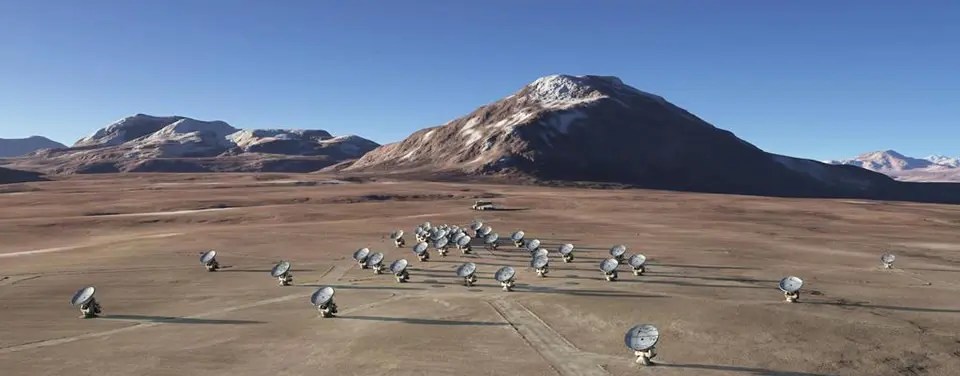
Summer job. For four months, I built a (very) basic understanding of radio astronomy and interferometry and the foundational programming skills that would let me actually launch into a thesis in the fall that would lay the groundwork for a larger, graduate level project.
A Statistical Analysis of Ring Structures in Young Protostellar Disks. That title has already undergone several revisions and more won’t surprise me.
September 2024
Fourth Year begins. To extend the comparison from September 2023, Fourth Year just takes the next step by adding the Thesis or advanced labs, or both depending on your program. The material isn’t harder than Third, if you learned what you needed to in those third-year courses, and the workload isn’t heavier because at this point you know what needs to get done.
Except for I complicated my Fall term with two Graduate courses. One true graduate course (Interstellar Medium, and worth about twice as much work per week, on average, as an undergraduate course) and one “dual-numbered” course, meaning that it’s taught at a single level but has both undergraduate and graduate qualification. Same material, but as a graduate student you have a project that is to result in a written report and a 40–45-minute presentation that, combined, are worth 25 percent of your grade. And the presentation is given to the rest of the class.
January 2025
The final term. Which, after the heaviness of last term should have felt like a relief as I kept at progress on my thesis and took several electives to make up my balance of them. First- and second-year courses seem very light by comparison now.
March 2025
I say should have because the thesis didn’t progress as well as I’d like, even though Dr. Sadavoy has kept telling me how happy she is with the progress, and the union representing Teaching Fellows and Assistants (academic positions occupied by Graduate students) went on strike in early March. As of this moment, the strike is ongoing and while it’s inconvenient for most of the undergrads, I hope they get everything they’re asking for.
And here we are. I’ll officially be a graduate student on 05 May 2025, the day before our anniversary and, incidentally, the day after my Supervisor’s birthday.
Six months ago, I would have said that the MSc was to teach me if I like research and the academic life to continue on to a PhD. That PhD would run me up to just about, or a touch past, my 60th birthday. I’m not going to get on a professor track at that point. But a couple of fun post-doctoral positions to carry me through to retirement age could be very cool.
But the original option is still on the table. Get a B.Ed. degree and become a teacher. This would take me until either the end of the summer I’m 57 or the beginning of the summer I’m 58. Stay in Ontario to do that and actually wind up with a bit of a pension if I teach until, say, I turn 70. Travel, relax, enjoy, write.
Or find cool international schools to teach at in other parts of the world and have some awesome experiences while soaking up some other culture.
There are decisions to be made, but probably not until near the end of the summer after next. Stay tuned.
Be well, everyone.



 Life, Writing, Weirdness
Leave a comment