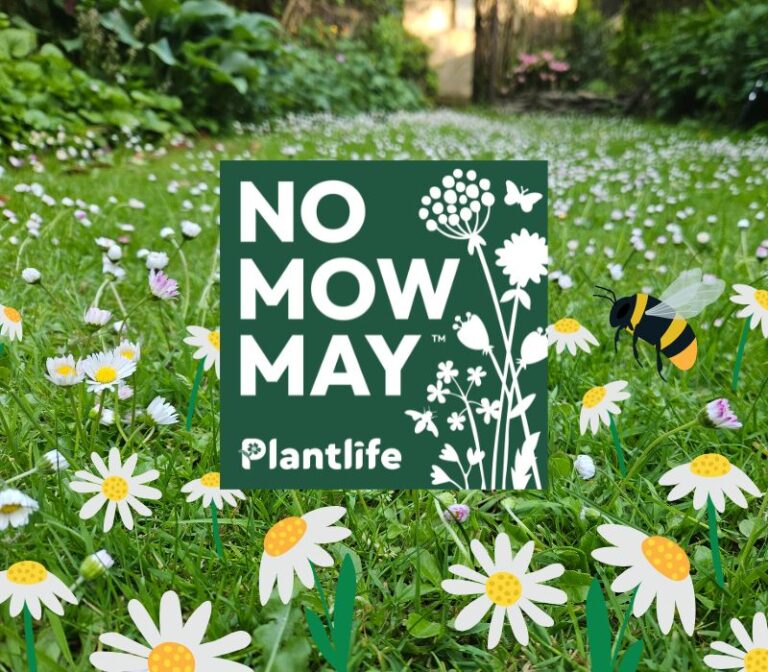
I like the idea of No Mow May, and not because cutting the lawn isn’t as fun as it used to be. Let everything finish waking up from winter and build proper species-specific summer housing. Let the early flowers pop and give the pollinators stuff to pollinate and eat. Yes, I seem to be aware that the idea started in the UK and the climate where I live is not quite the same as it is through most of the British Isles. Your climate may also vary. But I think it’s still relevant.
It’s not hard for me to not mow the lawn for most of May. Spring brings a lot of moisture here and my backyard will be squishy for at least another couple of weeks. The front lawn drains better and is already safe to stand in without soaking your socks, although the next rainfall could change that for a couple of days. Let the wildflowers grow, such as they are in town. I’ll also mow through the summer only as much as I have to, and I’ll do it at the top height setting on the mower.
But climate change is mucking with things, isn’t it? In spite of a couple of late-season, short-stay snowfalls, my lawn looks like we’ve already taken part in No Mow April. It’s not bad yet; if I were to start up the lawn mower, it’s about on par with a late-June or early-July weekly cut before the heat has really started to slow growth down. But steady growth will continue and I might need a scythe before the end of May.
Depending on how authoritative the local by-law officer is feeling, if the grass in the front yard gets too long, or a particular neighbour who likes to think he controls the neighbourhood decides to complain to that by-law officer, I may get a politely worded order to clean up my front yard. Which I would grudgingly comply with rather than get whatever the fine is now. The local requirement is for grass to grow to a height of no more than ten inches (yes, I live in Canada and that regulation should be in centimetres, twenty-five of them, but I also live in a small town run by conservatives who would mostly prefer that it was somewhere in the 1950s to 1980s rather than 2026), and we could get there. I’m also the guy who might go out with a ruler and a weedwhacker and cut everything that needs it down to twenty centimetres (eight inches) if I’m feeling contrary enough. And I think about the various species of insects laying their eggs in May in longer grass. Then I come along the first weekend in June before they’ve all hatched and shrink the local population by a measurable amount.
The real goal is to not need a lawnmower. We’ve already started converting the backyard, expanding the small area that can be referred to as The Wild Zone, i.e. whatever grows, grows, and carving up a big area where we’ve planted some fruiting shrubs and hopefully this year some native ground cover to choke out the weeds in between so no mulch is needed. There are further plans for the backyard so that eventually there’s no grass there whatsoever.
The front is a bit different, unfortunately. Aside from a lot of North American communities having bylaws similar to the one we have here, there’s still this societal expectation of grass at the curb. Which I hate. I’d rather replace it with a bunch of wildflowers and other things to attract small wildlife, or even a few banks of tomato plants. Are we going to be in this house long enough to get there? Good question. The answer is that I don’t know. My time in university will be done at the end of 2030, I think, and we have definite plans after that. Those plans involve living in another country (or several others) for five-ish years before settling into a reasonable final job to carry through until retirement. But, as a wise muppet once said, always in motion is the future.
If this is our retirement house, then yes, the front lawn will eventually go, too. If it’s not, that will be the next owners’ decision.
In the meantime, maybe I need a sign.
Be well, everyone.



Leave a Reply